Selling Into PE-Backed Companies
by Nick Schafer
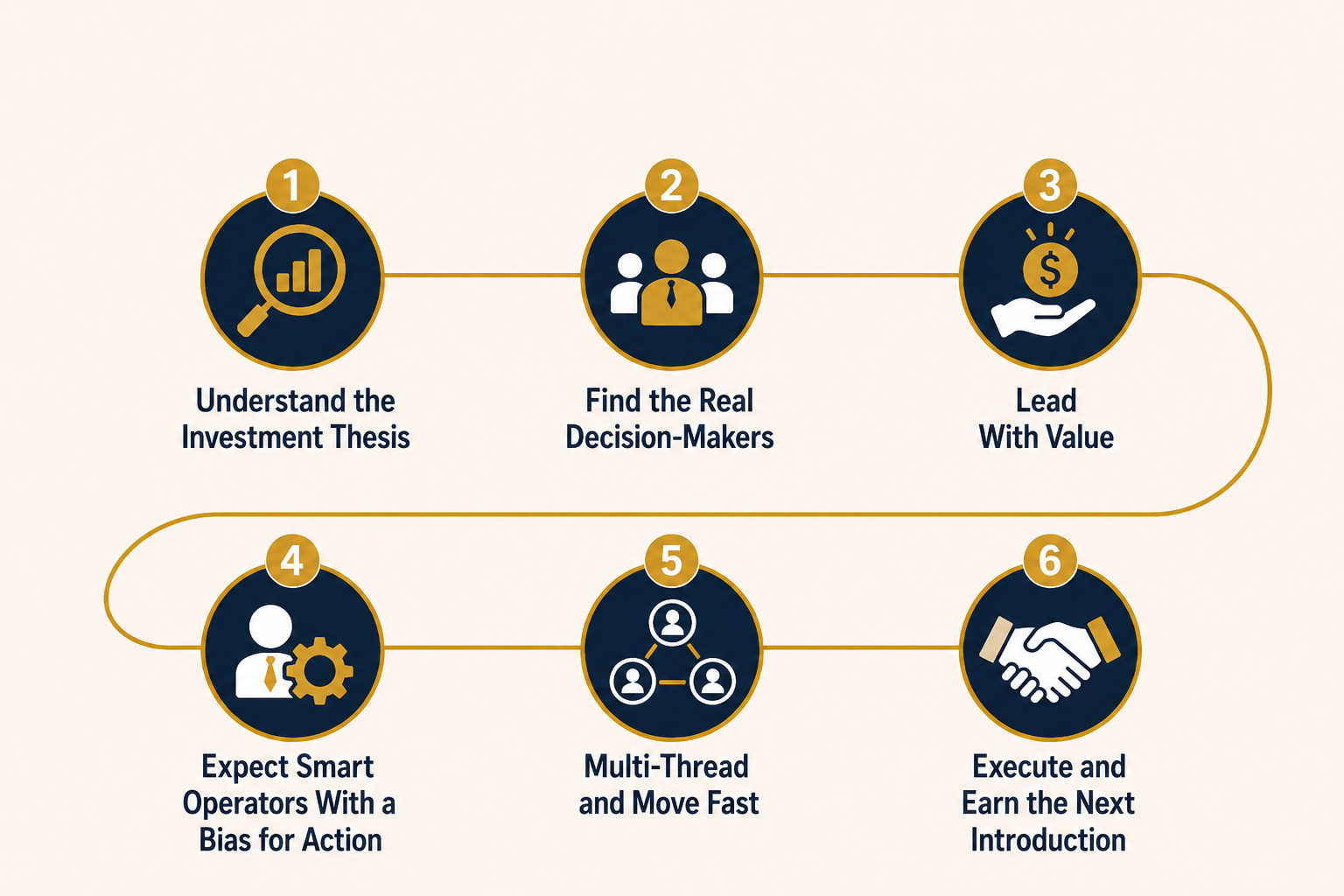
Why They’re Some of the Best Customers You’ll Ever Land
Private equity-backed companies can be some of the best customers you’ll ever work with. They’re often growing aggressively, investing in operational improvements, and are willing to invest when they see a clear return. But selling into them requires a different approach. The economics, timelines, and decision-making structures differ from those of a typical enterprise account.
For sales engineers, that difference matters. Technical fit alone is not enough; the solution needs to align with the PE sponsor’s value-creation plan before the deal is judged solely on features or price.
Over the last 20 years in enterprise sales, I’ve closed more than $300M in new business and worked with hundreds of organizations, including many backed by private equity firms. I’ve also worked directly with many PE firms, giving me a front-row seat to how they evaluate investments, drive value creation, and make buying decisions.
Here are a few lessons I’ve learned from selling to PE-backed companies and working directly with private equity firms over the last two decades.
Understand the Investment Thesis
Every PE firm acquires a company for a reason: revenue growth, margin expansion, operational efficiency, consolidation, or market expansion. That investment thesis drives nearly every major decision the company will make for the next several years, and your job is to figure out what it is.
If your solution supports the thesis, your deal becomes strategically important. If it doesn’t, don’t waste your time.
Timing matters too. The first 12-24 months after an acquisition are often when companies are most open to change. Leadership teams shift, initiatives launch, budgets move, and existing vendor relationships get reevaluated.
Pay attention to acquisition dates. They often tell you when the door is open.
Find the Real Decision-Makers
Many sales teams stop at the operating company.
The strongest sales and presales teams understand who influences decisions at both the portfolio company and the PE firm itself. Increasingly, operating partners, value-creation teams, and outside consultants play a role in evaluating major initiatives and investments. In many PE-backed environments, consultants are brought in to assess technology, operational processes, cost structures, or transformation initiatives, and their recommendations can carry significant weight.
The person signing the contract isn’t always the person driving the initiative, and the person driving the initiative may not even work at the company you’re selling to. Understanding the power structure early can dramatically shorten your sales cycle.
Lead With Value
Private equity firms care about growth, EBITDA, scalability, efficiency, and risk reduction. Features matter. Business outcomes matter more.
For sales engineers, this changes the discovery and demo strategy. The question is not only “Can we do this?” but “How does this capability support the operating plan, reduce risk, or improve the financial outcome?”
When prospecting, get to the point quickly. Your subject line, opening sentence, and meeting agenda should immediately answer one question: “Why should I care?”
A CFO, operating partner, portfolio executive, or consultant is far more likely to engage with a message focused on revenue growth, labor savings, margin improvement, or risk reduction than one focused on product features.
In PE-backed environments, clarity beats creativity almost every time.
Expect Smart Operators With a Bias for Action
One of the reasons I enjoy selling into PE-backed companies is that you’re often dealing with highly capable operators who are focused on results. Many were brought in specifically to improve performance, accelerate growth, or drive transformation. They’re smart, data-driven, and comfortable making decisions.
Just as importantly, they often have no bias toward legacy processes, legacy vendors, or the way things have always been done. They’re not protecting decisions that were made five or ten years ago. They’re evaluating the business based on what will create the best outcome going forward.
That creates opportunity. If a process is inefficient, they’ll change it. If a vendor isn’t delivering value, they’ll replace it. If a new solution can create measurable business impact, they’re willing to have the conversation.
Their mandate isn’t to preserve the status quo. Their mandate is to create value.
Multi-Thread and Move Fast
PE-backed companies move quickly, and priorities can change just as fast. Leaders change roles, organizations restructure, and new executives arrive with new objectives.
If your deal depends on a single champion, you’re exposed.
The strongest opportunities have support across multiple stakeholders and departments. For sales engineers, the technical win also has to be multi-threaded: IT, operations, finance, procurement, consultants, and the PE-side advisor may each evaluate a different kind of risk.
Keep momentum. Drive next steps. Follow up quickly. Make it easy for buyers to move forward. The sales teams that perform best in these environments respect people’s time and operate with urgency.
Execute and Earn the Next Introduction
Winning the first deal is valuable, but executing on it is where the real opportunity begins.
Private equity firms often own multiple companies within the same vertical, and a successful deployment at one portfolio company can create opportunities across the entire portfolio.
When you deliver the results you promised, operating partners and executives take notice. I’ve had successful deployments turn into introductions across multiple portfolio companies facing similar challenges, creating opportunities that would have been difficult to access through traditional prospecting alone.
That’s why it’s critical not to disappear after the contract is signed. Stay engaged, measure results, and share wins.
The best sales teams don’t think in terms of one deal. They think in terms of earning trust that opens doors to the next one.
Final Thought
The biggest mistake sales teams make is treating private equity-backed companies like any other prospect.
They’re not.
They operate on a different clock, answer to a different set of stakeholders, and make decisions through the lens of value creation.
When you understand the investment thesis, lead with business value, engage the right stakeholders, and execute on your promises, you’ll find that PE-backed companies aren’t just great prospects.
They’re often some of the best customers you’ll ever land, and the relationships you build with them can create opportunities far beyond a single deal.


Want more Sales Engineering content?
Get the best NAASE thinking each month: new articles, sharp perspectives, and exclusive insights.
Join NAASE