Commit to Consume: How Sales and Presales Can Build Adoption Into the Deal Before the Contract Is Signed
by Art Fromm

Why Winning the Deal Is Only the Beginning of Client Success
Winning the deal is different from creating client value. A signed contract marks a commercial milestone, but it doesn’t guarantee that the client will successfully adopt the solution, realize value, or achieve the business outcomes that justified the purchase.
That raises an important question for sales and presales teams: Are we trying to close a sale, or to help the client buy a solution they’re prepared, excited, and committed to using? This has always mattered, whether we’re selling a tangible product, a service, or software. Completing a transaction or delivering a solution is not the same as ensuring the client successfully adopts and uses it.
This becomes especially important for SaaS offerings and for solutions sold through consumption-based or outcomes-based pricing. In these environments, the seller’s ability to generate and sustain revenue depends not just on closing the initial contract, but also on whether the client actually uses the solution, realizes value, and continues to invest. For example, a SaaS deal may be considered closed when the contract is signed, but adoption and ongoing use of licensed software, bandwidth, connectors, and other capabilities are essential to retention, renewals, expansion, and sustaining Annual Recurring Revenue (ARR).
Ultimately, sales is responsible for generating revenue. The deal may close, but it’s what happens afterward that determines whether the opportunity becomes a successful, lasting business relationship. The provider has a vested interest in ensuring the client gets the results they expected.
That’s the mindset behind Commit to Consume: shifting the focus from simply closing the deal to establishing the mutual commitment required for success. The client must be prepared to use the solution and realize value, while the provider must remain committed to helping make that happen. That shared commitment is what turns a signed contract into a successful, enduring business relationship.
Adoption Often Starts Before the Contract
Adoption is frequently treated as a post-sale responsibility. In many organizations, Sales owns the opportunity through signature while presales validates the solution; then Customer Success or an implementation team takes over. That handoff can create a dangerous gap.
The business problem may be clear, the technology validated, and a Proof of Value (POV) successful. Yet after signing, the client may discover that key stakeholders aren’t aligned, required resources aren’t available, or the expected business value isn’t achievable. Consumption may stall, the expected business value may go unrealized, and the relationship may be put at risk.
The deal was won. But was the buying process actually completed?
A Technical Win Isn’t Necessarily a Client Win
A technical evaluation can answer an important question: Does this solution address the client’s requirements? But another question matters even more: Can the client use it successfully to achieve the outcome they care about?
In NAASE’s Sales Engineering Signals 2025, 24% of the SEs surveyed selected customer adoption and retention among the areas where they believe they deliver the most measurable value. This suggests that some SEs already view adoption as part of their contribution, not solely as a post-sale concern.
Sales Engineers don’t need to become Customer Success Managers. They can bring implementation and adoption realities into the buying conversation while there’s still time to address them. An SE can ask: “What will it take for your organization to get the value you’re expecting from this?”
That question can uncover risks before they become post-sale problems.
Turn the Buying Process Into a Preview of Adoption
This doesn’t require another complicated process, a giant checklist, or the use of presales resources for implementation. It requires changing a few conversations already happening during the buying process.
I suggest an overarching “Account Management” role that provides continuity throughout the entire client lifecycle. This function begins with “hello” and continues through implementation, adoption, and results measurement, then extends to new opportunities that emerge as the client gains additional value and the sales organization continues to build the relationship. This creates a flywheel effect, where successful outcomes generate momentum for continued client success and future business opportunities.
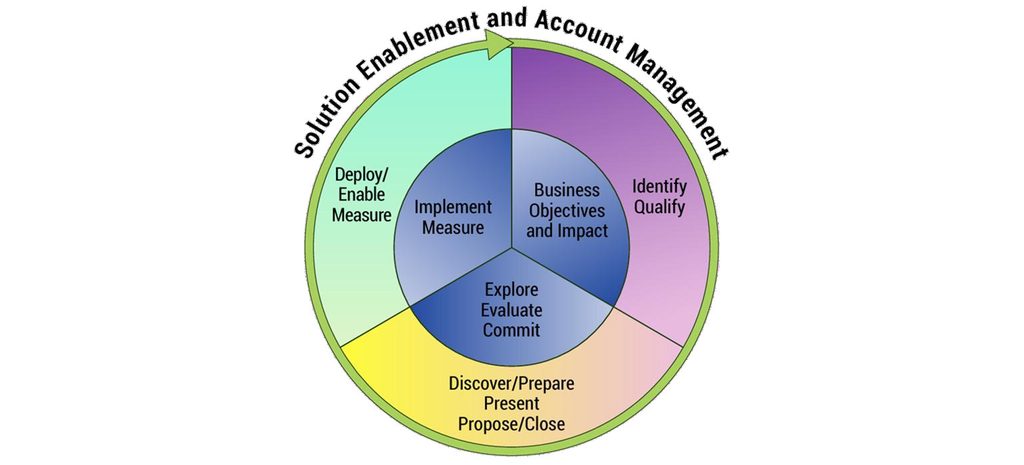
From Making SEAMless Sales by Art Fromm.
© 2024 Team Sales Development Inc. All Rights Reserved.
In some companies, this may be the Account Manager’s role; other companies may involve Customer Success more actively throughout the sales opportunity, even before the deal is signed. The primary objective is to ensure the proposed solution meets the client’s needs and positions them to achieve the business outcomes they’re seeking.
Depending on the opportunity and the client’s needs, involving Customer Success earlier can help identify adoption requirements, implementation considerations, and potential risks. This can help ensure a smooth transition from the sales process into the engagement and implementation phases, creating a natural continuation of the relationship rather than a disconnected handoff.
Five Areas to Explore Before the Contract Is Signed
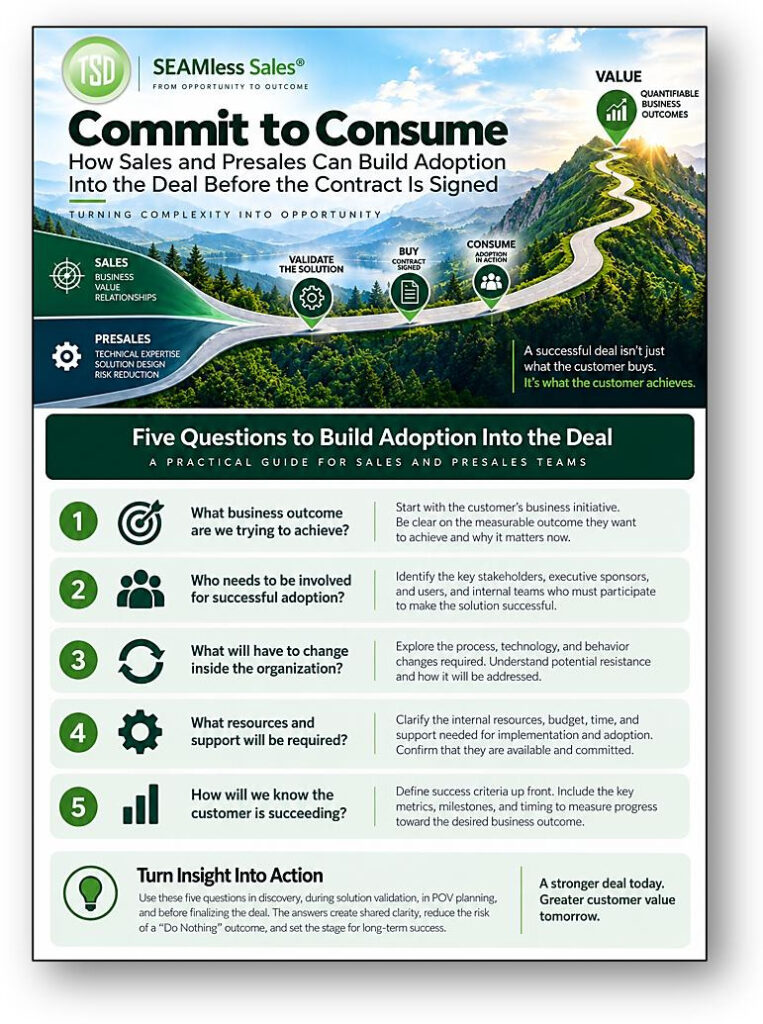
As the opportunity progresses, sales and presales should explore five things:
- What business outcome are we trying to achieve for the client stakeholders?
- Which stakeholders need to be involved and committed to successful adoption?
- What, if anything, needs to change inside the organization?
- What sales and implementation resources and client support will be required?
- How will we know the client is on the right trajectory?
These aren’t post-sale questions. They’re buying questions. The answers create shared clarity about what the client is committing to beyond signing a contract.
POVs Should Reduce Adoption Risk, Too
A Proof of Value shouldn’t simply demonstrate that the technology works. It should help the client determine whether moving forward makes sense. Before the POV begins, the parties should agree on its success criteria, scope, responsibilities, and the buying decision it should enable.
Ask: What buying decision will this POV enable?
If the POV demonstrates technical capability but doesn’t address what successful implementation and consumption look like, the client may leave confident in the solution but not in their ability to succeed with it. A well-designed sales process should reduce both technical and adoption risk by “flattening the curve” early in the engagement.
Make the Commitment Visible Before Signature
Treat the latter stages of the sales process as a preview of the client’s first 90 days. Before signing, clarify who owns implementation and adoption, which stakeholders must stay engaged, what resources are required, and what could cause the initiative to fail.
You’re not asking the client to complete an implementation plan for free. You’re helping them understand the commitments that come with their decision and establishing shared accountability.
Sometimes this conversation reinforces the decision to move forward. Sometimes it surfaces resources or commitments that need attention. Sometimes it reveals the client isn’t ready. That may be uncomfortable, but identifying adoption risk before signature gives everyone a chance to address it.
Ignoring it transfers the problem to the post-sale team and the client.
From Transaction to Impact
Stop thinking of the contract as the finish line. Commit to Consume means the client and provider understand the outcome they’re pursuing, who must participate, what changes and resources are required, and how progress will be recognized. Top-performing sales teams also identify when value should be realized and ensure the client can achieve that milestone.
Use the five questions during discovery, solution validation, POV planning, and deal reviews. If the answers aren’t clear, don’t assume the post-sale team will figure it out later.
Make the commitment visible while you’re still selling.
Discovery creates shared clarity. Shared clarity enables commitment.
Commitment creates progress.
The ultimate measure of a successful sale isn’t whether the client bought what we sold; it’s whether they achieved the outcomes they desire.
Take This Into Your Current Deal
Before your next complex opportunity reaches the finish line, ask: Have we validated that the client can successfully use the solution, or only that they can buy it?
Sometimes the biggest opportunity isn’t changing what your team sells. It’s changing what happens before the contract is signed to establish the conditions for successful implementation, value realization, and mutual success.
© 2026 Team Sales Development Inc. All Rights Reserved. Authorized for use by NAASE. Sharing is welcome, provided this complete copyright and attribution footer remains attached.


Want more Sales Engineering content?
Get the best NAASE thinking each month: new articles, sharp perspectives, and exclusive insights.
Join NAASE