The Reliability-Focused Site Walk: Looking Beyond the Obvious
by Carl Albert
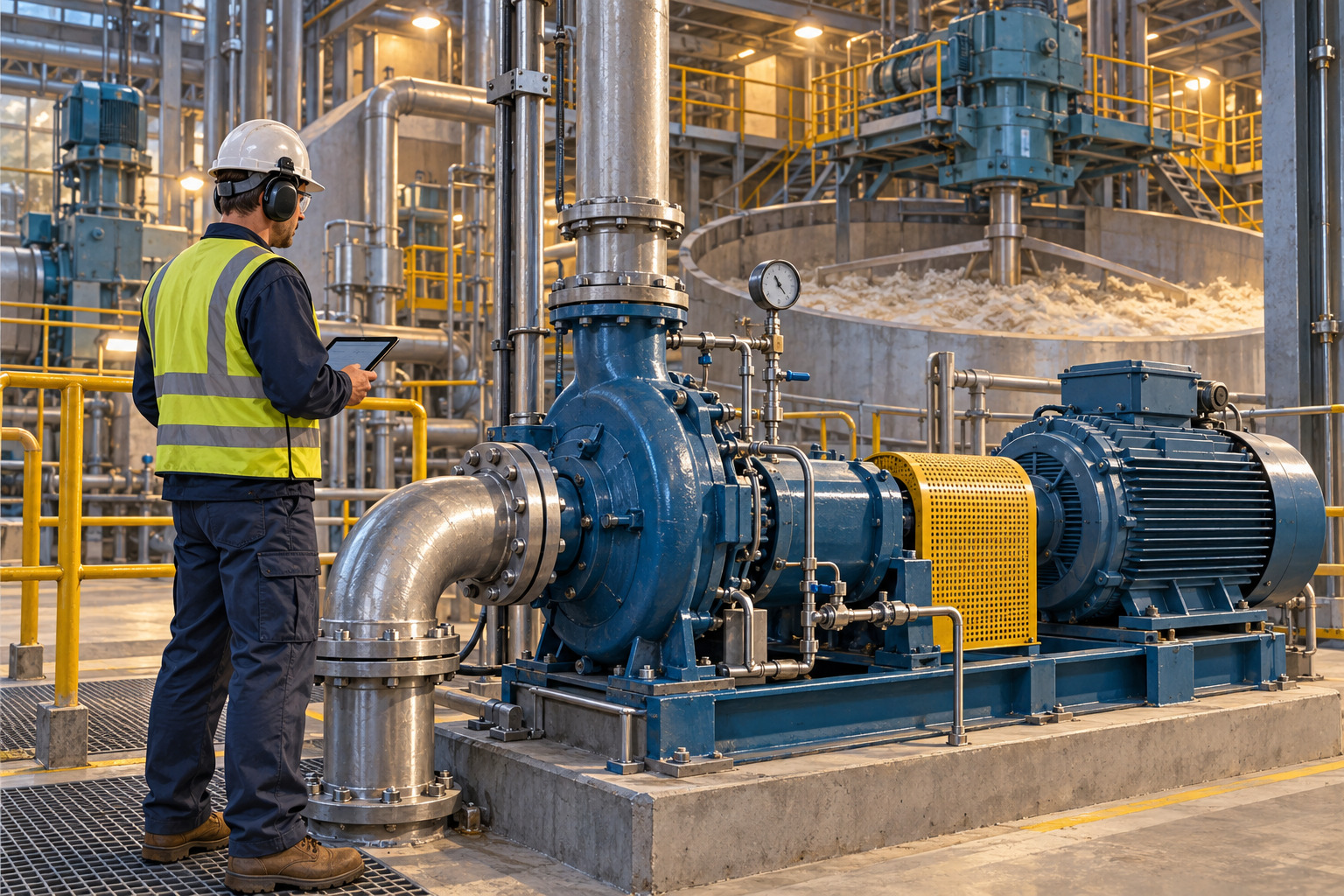
For an industrial sales engineer, a site walk is an opportunity to understand the operating conditions behind an equipment problem before recommending a solution.
Rotating equipment is the focus of this discussion. However, the principles of a reliability-focused site walk, including careful observation, understanding operating conditions, and following through on findings, apply to all types of equipment.
Walk through a paper mill and you will encounter pumps, pulpers, agitators, mixers, and refiners performing essential duties. The equipment is running, production is moving along, and there may be no obvious signs of trouble.
But does each asset have the conditions it needs to remain reliable?
That question should guide the walk. We need to observe the equipment, understand its operating environment, and recognize conditions that could contribute to failure, even when the warning signs are subtle or hidden.
Bring Your Senses. And Your Curiosity
Visual observations are a good starting point. Leakage, corrosion, loose hardware, damaged supports, lubricant discoloration, and accumulated deposits can all provide clues. A freshly cleaned floor may also raise a question: What was cleaned up, and why?
Listen, too. Has an agitator developed a different sound? Is there an intermittent rattle, squeal, or change in a refiner’s operating rhythm? For belt-driven equipment, observe belt condition from a safe location. Are there signs of wear or damage? Are the belts squealing or showing signs of slipping? A sound that has become familiar to everyone in the area may still indicate a condition worth investigating.
Unusual odors can provide additional clues. Appropriate instruments can measure temperature and vibration, adding objective data to what our senses detect. Observe operating equipment from safe locations and follow site procedures.
The key is knowing what normal looks and sounds like, what the normal measurements are, and recognizing when something changes.
Look Beyond the Component
A reliability-focused walk considers the complete installation: the driven equipment, motor, gearbox or drive arrangement, lubrication, sealing systems, supports, and process connections.
A recurring bearing, packing, or seal failure deserves questions about the conditions surrounding that component. Is lubrication appropriate? Are operating loads changing? Are support systems performing as intended?
The component that fails may be where a problem becomes visible. The contributing conditions may originate elsewhere.
For a sales engineer, this distinction changes the recommendation. Replacing the failed component without addressing the surrounding conditions may leave the customer with the same recurring problem.
What You Cannot See Matters
Consider rotating equipment that relies on an external flush water supply to protect its packing or mechanical seal. This could be a pump, pulper, agitator, or refiner, depending on its design.
The flush line is connected, the valve is open, and a pressure gauge shows a reading. At first glance, the system appears to be doing its job.
Yet several important questions remain:
- Is flush pressure appropriate relative to the pressure inside the stuffing box or seal chamber?
- Does that relationship remain adequate as operating conditions change?
- Is the required flow actually reaching the equipment?
- Is the flush water clean and suitable for the application?
- Are we supplying more water than the arrangement needs?
The presence of a flush line does not establish that the sealing environment is being protected.
Follow the Pressure. And the Flow
Where external flush water is intended to exclude process fluid, inadequate flush pressure can allow process fluid and solids to enter the stuffing box or seal chamber. Packing or seals may then operate in an environment that compromises performance and service life.
Excessive flush flow creates a different concern. It can waste water and introduce unnecessary fluid into the process, potentially increasing downstream treatment or removal requirements.
Pressure and flow must be evaluated separately. A pressure reading alone does not confirm that the required flow is reaching the equipment. Likewise, visible flow does not establish that the pressure relationship is appropriate.
The objective is to maintain the pressure, flow, and fluid quality required for the specific equipment and sealing arrangement.
One Reading Is Only a Snapshot
A site walk captures conditions at a particular point in time. Reliability depends on what happens throughout operation.
Does flush pressure drop when other equipment draws from the same supply? Do changes in stock consistency, vessel level, or production rate affect operating conditions? What happens during startup, shutdown, or a process upset?
A reading that appears acceptable during the walk may miss an intermittent condition.
This is where operator experience becomes especially valuable. Ask: “Does it always sound like this?” “When does the leakage increase?” “What changes when production goes up?”
The people working around the equipment every day may have observed a pattern that no one has documented. Their observations can help connect recurring failures to the conditions that precede them.
Close the Loop
A reliability-focused site walk should give the sales engineer clear observations to guide the recommendation and define practical follow-up.
Record the equipment identification, operating conditions, relevant readings, and any items requiring verification. Compare findings with established requirements and previous observations. Assign responsibility for follow-up, then confirm that the corrective action addressed the condition.
If a support system requires adjustment, verify its performance afterward. If an unusual sound warrants investigation, document what was found. Carry that knowledge into future walks.
Every walk is an opportunity to better understand how equipment and process interact. A useful question is: “What could be affecting reliability here that we have not yet verified?”
The value of a reliability-focused site walk is measured by the problems we identify and correct before they become failures.


Want more Sales Engineering content?
Get the best NAASE thinking each month: new articles, sharp perspectives, and exclusive insights.
Join NAASE